
Project Description
Name of Schools: Bell Baxter High School, Madras College and Waid Academy
Partners/Businesses Involved: DYW Fife, Tay Cities Hospitality Skills Programme, Raeburn Training, The Old Course Hotel, The Fairmont Hotel, The Rusacks, St Andrews Links Trust, The R&A
Sector/Industry: Tourism & Hospitality
Activity Type: Work Inspiration & Preparation | Skills Development | Sector Awareness
Young people from Bell Baxter High School, Madras College and Waid Academy recently took part in the Tay Cities Hospitality Skills Programme, a collaborative initiative designed to raise awareness of careers within the hospitality sector while providing learners with valuable industry-recognised training and direct employer engagement opportunities.
Funded through the Tay Cities Hospitality Skills Programme, the initiative aims to inspire more young people to consider hospitality as a viable, sustainable and rewarding career choice while addressing skills shortages within the sector. Delivered by DYW Fife, the programme supported learners from S4 to S6 to develop industry-specific skills, gain recognised qualifications and explore a range of hospitality career pathways.
Supporting Future Talent in Hospitality
The Tay Cities Hospitality Skills Programme was established to help embed hospitality learning within schools, support career education and strengthen pathways into employment, training and further education.
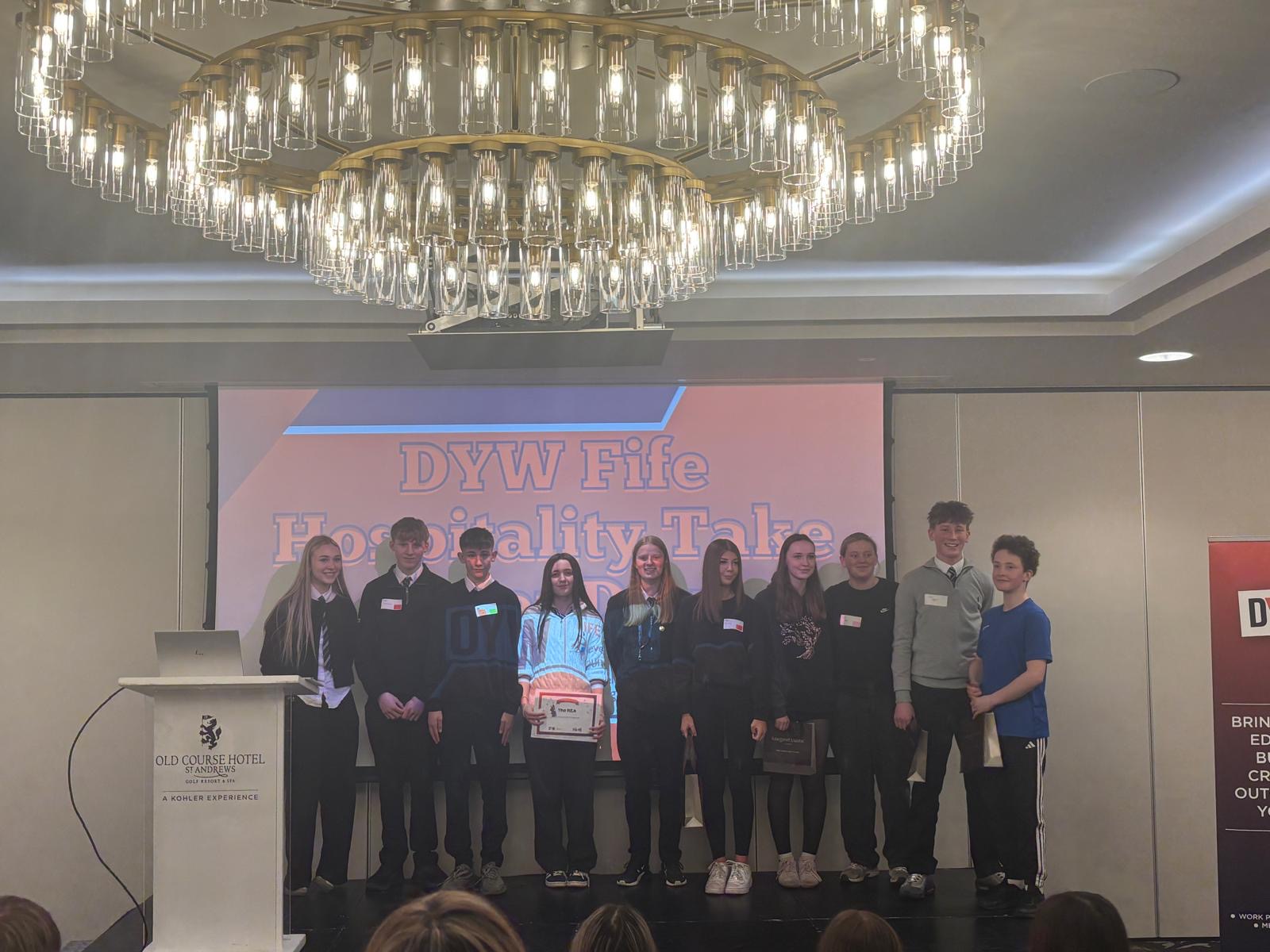
DYW Fife successfully secured funding to deliver a range of hospitality-focused activities, including industry skills training and a Hospitality Takeover Day at the Old Course Hotel, St Andrews.
The programme was designed to:
- Raise awareness of the hospitality sector.
- Create meaningful employer engagement opportunities.
- Increase young people’s aspirations.
- Improve understanding of career pathways within hospitality.
- Support progression into employment, apprenticeships and further training.
- Provide learners with industry-recognised qualifications.
By connecting learners directly with employers and industry professionals, the programme helped demonstrate the breadth of opportunities available across hospitality and tourism.
Industry Skills Training
As part of the programme, participating pupils completed specialist training delivered by Raeburn Training.
Customer Service Training
Learners developed the knowledge, behaviours and communication skills required to deliver high-quality customer service across different environments.
The course explored:
- Understanding customer needs.
- Professional communication techniques.
- Active listening skills.
- Handling complaints effectively.
- Digital customer service.
- The impact of customer experiences on organisations.
Through practical scenarios, discussions and role-play activities, pupils developed confidence in interacting with customers and gained a better understanding of what employers expect in customer-facing roles.
NUCO Food Hygiene Qualification
Participants also completed a nationally recognised NUCO Food Hygiene Certificate, providing them with an understanding of food safety legislation and best practice.
Topics covered included:
- Food safety hazards.
- Cross contamination.
- Personal hygiene.
- Food storage procedures.
- Food poisoning prevention.
- Responsibilities under food safety legislation.
The qualification provided learners with a valuable addition to their CVs while helping prepare them for future roles within hospitality and catering environments.
Learning from Industry Professionals
A key strength of the programme was its focus on employer engagement and industry insight.
The Hospitality Takeover Day at the Old Course Hotel allowed learners to experience one of Scotland’s most prestigious hospitality venues and gain a better understanding of the range of careers available within the industry.
By interacting directly with hospitality professionals, learners were able to explore different job roles, hear about career journeys and gain a realistic understanding of the skills required to succeed within the sector.
The experience helped challenge common misconceptions about hospitality careers and highlighted progression opportunities available across areas such as:
- Food and beverage operations
- Customer service
- Hotel management
- Events and conferencing
- Hospitality leadership
- Tourism and visitor services
Building Skills and Confidence
Throughout the programme, young people developed a range of transferable skills that are valued across many sectors, including:
- Communication
- Teamwork
- Customer service
- Problem-solving
- Professional behaviour
- Confidence and self-awareness
The combination of accredited training and direct employer engagement ensured learners were able to build both practical skills and industry knowledge.
A Strong Partnership Approach
The success of the programme was made possible through strong partnership working between DYW Fife, participating schools, training providers and hospitality employers.
The positive impact of the initiative has already encouraged continued investment in hospitality education, with all participating schools submitting further funding applications to expand hospitality-related opportunities for future cohorts of learners.
This demonstrates the value of collaborative approaches in helping address sector skills shortages while providing meaningful opportunities for young people.
Impact and Outcomes
The Tay Cities Hospitality Skills Programme delivered a range of positive outcomes for participating learners, including:
- Increased awareness of hospitality careers.
- Industry-recognised customer service and food hygiene training.
- Improved confidence and communication skills.
- Enhanced understanding of employer expectations.
- Meaningful engagement with hospitality professionals.
- Greater awareness of progression routes within the sector.
- Support for positive destinations through education, training and employment.
By combining practical training with real-world employer engagement, the programme provided young people with the skills, confidence and knowledge needed to consider hospitality as a future career choice.
The initiative highlights the important role partnership working can play in developing future talent and ensuring young people are equipped to take advantage of opportunities within one of Scotland’s key growth sectors.